After reading Open Practices: Briefing by Beetham et al. (2012), I found myself both inspired and little overwhelmed by the potential and complexity of open educational practices (OEP). The briefing about UK’s OER program’s findings explores how OER are not just about free content – they’re about reshaping how we teach, learn and share knowledge.
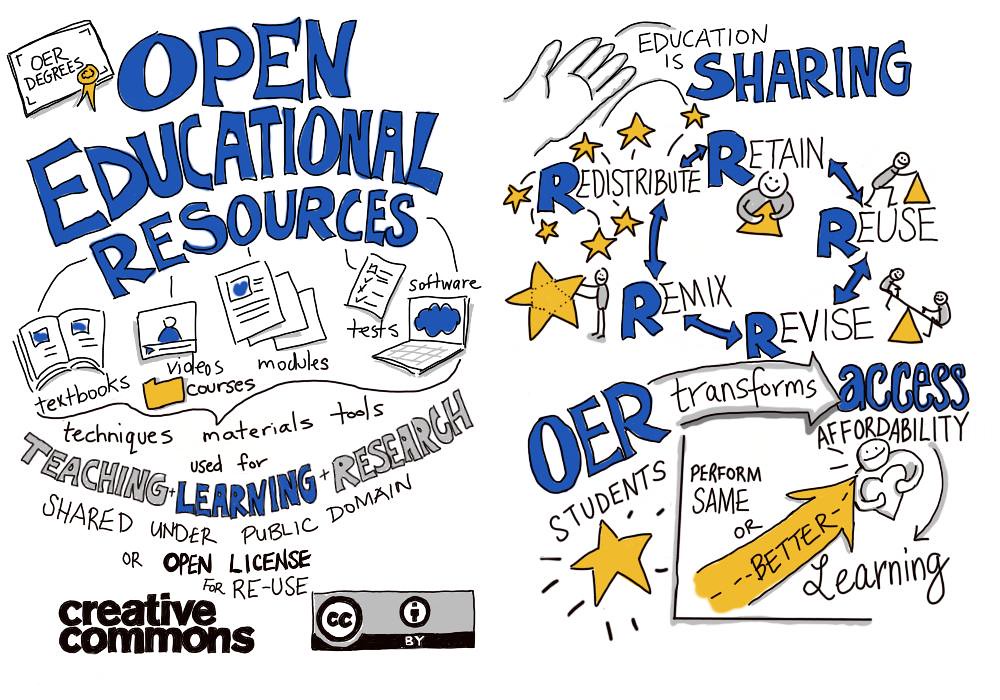
At its core, OEP is about equity, collaboration and innovation. It is not just about putting a PDF online but instead about encouraging learners to co-create knowledge, academics to share their teaching practices and institutions to embrace transparency in both content and methodology. The paper argues that this openness goes beyond the resources into pedagogy, research and even student assessment models. It creates a shift in the mindset.
One of the most compelling parts of the paper is how it frames OEP as a cultural shift, for example, teachers are not just expected to post content online; they are encouraged to engage in public scholarship, open peer review and use social media as a mean of academic exchange. The paper also addresses student role in openness. Student access to free content is very helpful but when they contribute back, for example, collaborating on wikis or building open course content, this blurs the lines between a learner and an educator in powerful ways.
By the time I finished reading the paper, I was left wondering, “how can I start small?” Maybe by designing a project where students blog about their learning or by choosing to publish my lesson plans. I think one thing I learned from this is that openness is not a destination but instead a practice. It requires rethinking power dynamics, taking ownership of your own learning and the very structure of education.
I chose to include this TedTalk as it reinforces the idea that open educational practices (OEP) are not just about free access to content – they are about fundamentally rethinking the roles of educators and learners. Wiley’s emphasis on sharing as the core of education aligns with the paper’s call for openness in pedagogy, assessment and collaboration. He captures the idea of openness as a cultural shift perfectly by arguing that educators must not only share resources but also invite students into co-creation of knowledge. His talk made me feel more confident in starting small like having students blog or by making my own lesson plans available.
References
Beetham, H., Falconer, I., McGill, L., Littlejohn, A., & JISC. (2012). Open practices: briefing paper. https://oersynth.pbworks.com/w/file/fetch/58444186/Open%20Practices%20briefing%20paper.pdf